English


Reading
Children develop their reading in exciting ways. In Early Years, they begin their journey learning how to hold a book and talk about what they see. By the end of Reception, pupils will be beginning to read using their newly acquired phonics and early comprehension skills. Hearing stories being read in an imaginative and creative way by staff on a daily basis fosters a love of reading and books in general. We have purchased the DfE validated scheme- Little Wandle: Letters and Sounds Revised to support our teaching and learning of phonics in EYFS and KS1 and furthermore into KS2.
In Key Stage 1, we will equip children with the necessary skills required to become capable and confident readers, thus providing a lifelong love of reading and literature. By immersing the children in a rich variety of texts, we will inspire their imagination.
In Key Stage 2, pupils read regularly as individuals and in groups. They further develop their comprehension of texts and their ability to respond to higher-order questions about what they have read. Where children need help with phonics they are supported so that they can make rapid progress towards reading proficiency. Children love reading from the school’s vast and varied collection of books and e-books.
Writing
When beginning to write, mark making in context in Early Years is valued before being encouraged to use phonic and letter formation knowledge to write more formally.
In Key Stage 1, children will develop an extensive vocabulary and their use of grammar that will inspire them to write clearly and accurately for a range of contexts, purposes and audiences.
Further up the school in Key Stage 2, children are taught to write accurately, grammatically and neatly, enabling them to approach their creative written work with ease and confidence. A major strength of the school is its approach to cross-curricular writing. Children have excellent opportunities to develop their understanding of other subjects by writing in original and innovative ways.
The school’s delivery of the English curriculum is structured and progressive, and yet open to flexibility and flair. Children are assessed consistently across the school, and staff know what children have experienced previously and what will be taught in the future. There is a rigorous programme of monitoring, feedback, and in-house training in key areas of the English curriculum.
Reading, writing and speaking at Lady Bankes Primary School are central to the school’s successful ethos, both in English lessons and across the whole curriculum. The subject is integral to the values of our school and gives every child a chance to fulfil their Ambition, Togetherness, Opportunity, Respect, Curiosity and Happiness!
No Pens Day


At Lady Bankes, we recognise the vital role that oracy plays in children’s learning, development and future success. Speaking and listening are fundamental skills, helping children to communicate their ideas, express themselves confidently and develop positive relationships with others. Our ‘No Pens Day’ provided the children with a fantastic opportunity to practice these skills. With pens put aside for the day, children were encouraged to learn through talking, listening, questioning, explaining and sharing their ideas. Classrooms were filled with rich conversations and meaningful discussions, giving every child the opportunity to use and develop their voice. Year 4 baked and brought literature to life through art. Year 5 explored Anglo-Saxon crime and punishment through role play and Year 6 got creative in a photography lesson focusing on perspective. Across the school, there was a strong emphasis on collaboration and discussion, with children actively sharing ideas.



World Book Day

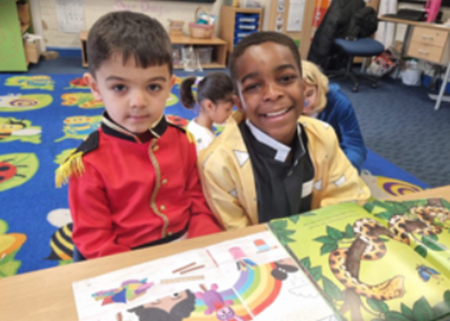
We love celebrating World Book Day at Lady Bankes and this year we took the opportunity to share our love of reading across the school.
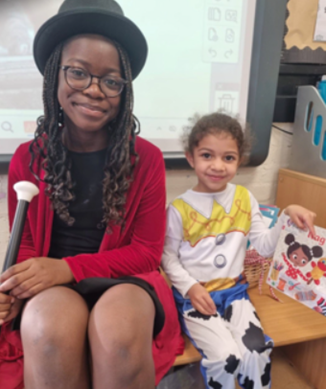
Our Year 6 children enjoyed sharing their favourite books and stories with the younger children, encouraging them to discover the magic and joy of reading. It was wonderful to see our older pupils showing such kindness, enthusiasm and encouragement towards their younger peers. They were fantastic role models and really helped to inspire a love of books.